
Do you know companies that receive opportunities by WhatsApp, but are lost between conversations, spreadsheets and reminders? Solving this routine can become a service sold with your brand. The white-label CRM allows you to start with a technology already developed and focus work on the implementation, service and achievement of customers.
The model interests agencies, consultants and professionals who want to build a software operation without creating a development team. To assess whether it makes sense, it is necessary to understand what you receive from the provider and what remains your responsibility.
What is a white-label CRM?
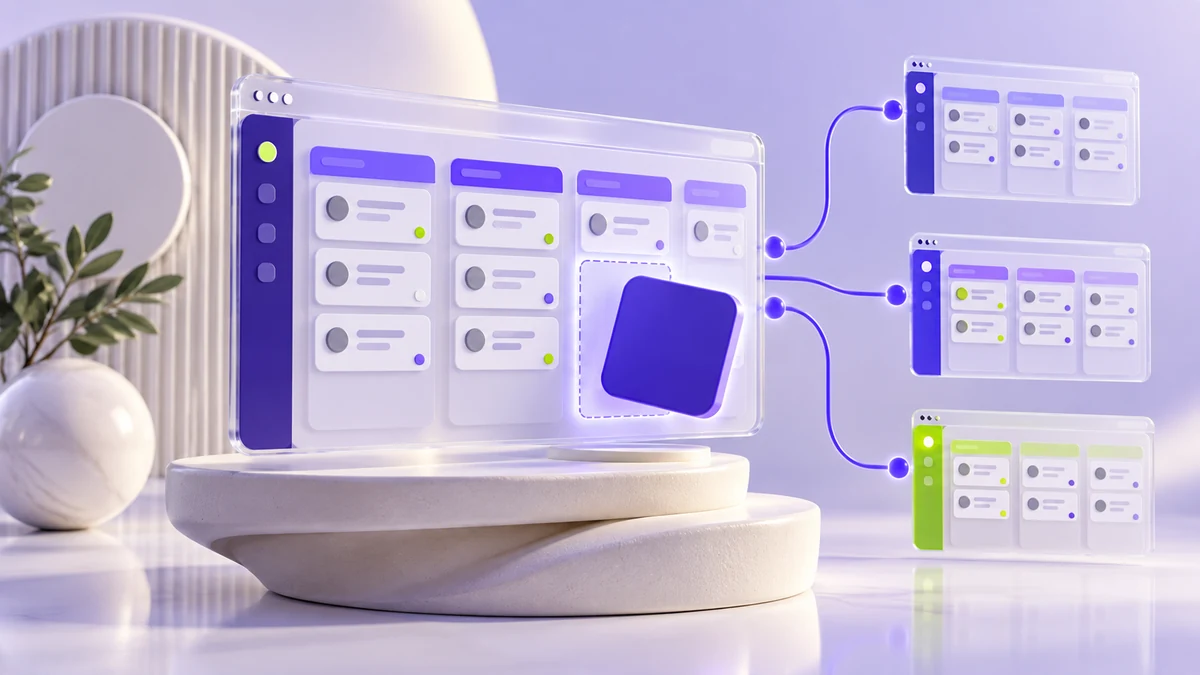
white-label CRM is a customer relationship management platform that can be marketed by a partner with its own identity. Depending on the solution, this customization includes the logo, colors, domain access and composition of the plans offered.
The software organizes contacts, conversations, opportunities and commercial activities. In the white-label mode, the supplier develops and maintains the technology, while the partner creates its offer and takes care of the relationship with the companies it attends.
white-label does not mean acquiring the source code or becoming the owner of the technology. The right of use, the possibilities of customization and the conditions of resale depend on the contract. This distinction helps to compare proposals with realistic expectations.
How it works in practice
Imagine a consultancy that caters to service companies. It realizes that budget requests arrive, but they remain untracked. Instead of developing a system, it hires a white-label platform, applies its brand and sets up a commercial process for that audience.
- Organizes the identity: defines the commercial name, domain and appearance of the platform.
- Choose the offer: combines access to CRM, initial configuration, training and monitoring.
- Implant on the client: Create stages of the funnel, responsible and rules of attention.
- Accompany use: Check whether contacts are being registered and if the next actions take place.
- Maintains the relationship: It answers doubts, reviews processes and expands the solution when there is a real need.
The customer buys a more organized operation. The platform allows delivery, but adaptation to the business is an important part of the partner's value.
Sales white-label, indication and own development
| Model | How you participate | Where's the job? |
|---|---|---|
| Indication or affiliation | Presents a customer to the supplier, according to the rules of the program. | Generate qualified opportunities and follow directions. |
| White-label CRM | Build an offer with your identity using a licensed platform. | Sell, deploy and maintain the relationship with the portfolio. |
| Self-development | Creates and maintains the product and infrastructure. | Engineering, security, evolution, support and commercial operation. |
There is no ideal model for everyone. If your differential is to know a segment and help companies sell better, the white-label can bring your experience closer to a recurring delivery.
What resources to evaluate before choosing
Start with the customer process. A business that loses budgets needs history, responsibility and next action. An operation with several people in the service also needs distribution and visibility about conversations.
- Centralized attention: channels and history accessible to authorized personnel.
- Sales funnel: clear steps to accompany every opportunity.
- Automation: flows and tasks that reduce repetitive work.
- Reports: information to help the customer decide the next step.
- Personalization: brand, domain and experience compatible with your offer.
- Operation: Support, usage limits, additional costs and data export possibility.
It asks for a demonstration with a specific situation: to receive a contact, to qualify it, to create an opportunity and to take back the attention. This route reveals more about the adequacy of the product than a list of features.
How FunnelOps enters this model
FunnelOps offers a White-label CRM for partners who want to sell attention, automation and sales with their brand. The platform brings together omnichannel attention, CRM and sales funnelartificial intelligence resources and integrations.
The infrastructure and the evolution of the platform are with FunnelOps. The partner builds its offer and defines how it serves its customers. Before hiring, align the necessary resources, the number of connections, the commercial conditions and the limits of responsibility of each party.
What to Prepare to Start
Choose an audience you know, describe a recurring problem and mount a short demo to solve it. Then, turn that demonstration into an implementation area: what will be configured, who will be trained and how will support the customer.
Avoid starting with dozens of different services. A clear offer is easier to explain, deliver and improve. Its first goal is to demonstrate that it can put a company into use CRM consistently.
Frequently Asked Questions
Do I need to know how to program to resell CRM?
Not to configure and market the features already available on the platform. Specific integrations or out-of-standard customizations may require technical work, which should be foreseen in the scope.
Can I set the price for my customers?
In the association model of FunnelOps, the partner defines its commercial offer. The price should consider the cost of the platform, service and services included.
Can one segment be started?
Yes. Focusing on a segment makes it easy to repeat demonstration, training and implementation. Expansion can occur after this process is working.
Upload your CRM offer with your brand
Tell the FunnelOps team which audience you want to serve. Know the platform and the conditions for structuring your white-label operation.
Talk about my operation →