Choose who belongs in the campaign
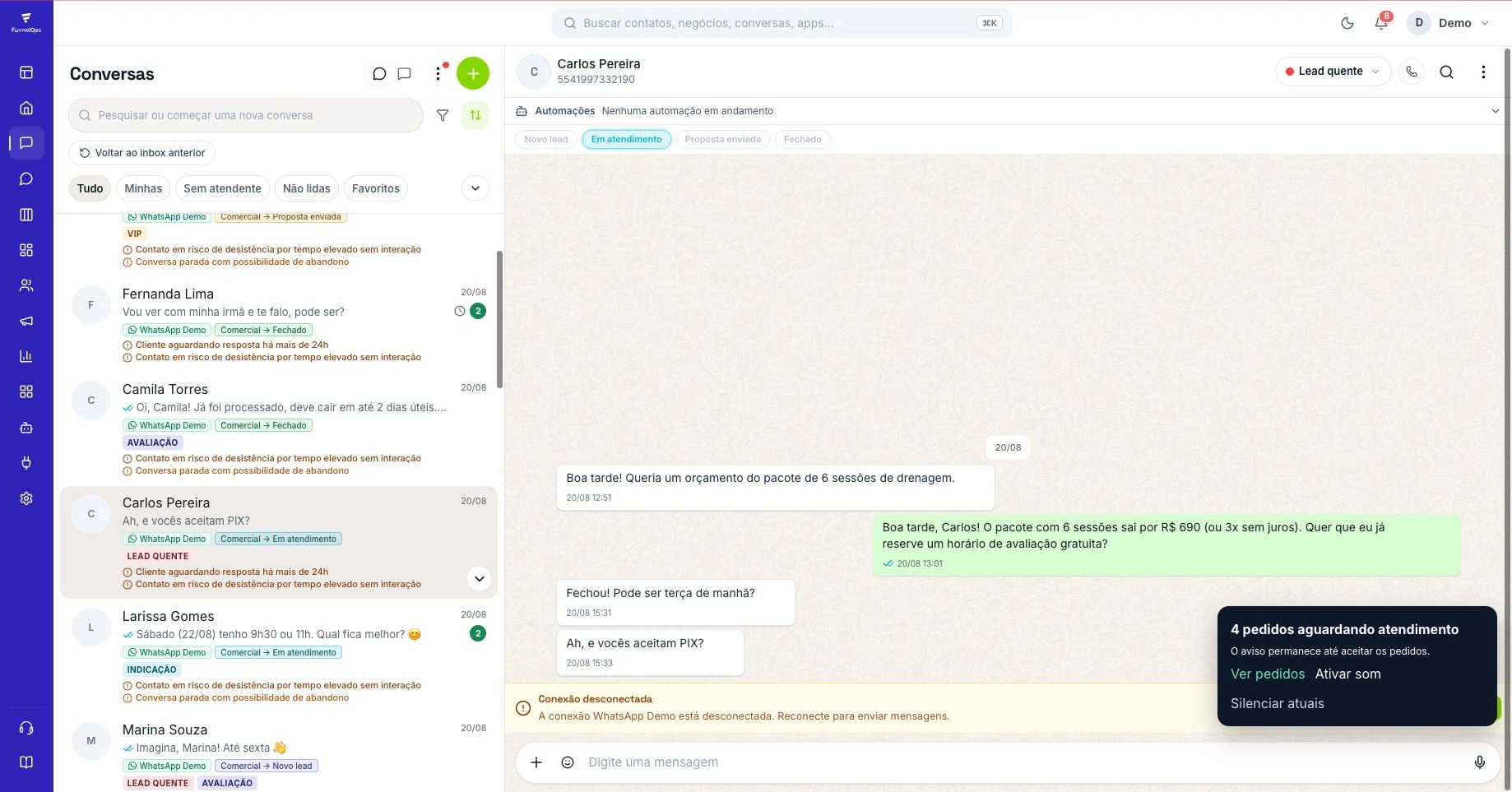
Separate former customers from contacts who never purchased. Within each group, identify the service of interest and the last known sales situation. Someone who postponed a purchase needs a different approach from someone who completed a service months ago. Consider product seasonality and why it makes sense to reconnect now. Periodic maintenance, a relevant new offer or an unresolved question may provide a suitable reason for the team to evaluate.
Organize contacts in FunnelOps
Open Contacts and use existing tags to identify a relevant segment. Review the history and add a specific tag for the planned campaign. In Kanban, inspect stalled proposals and lost opportunities that may justify a fresh conversation. Verify the purchase record before including someone in a group defined by previous purchases. Document your selection criteria so other agents understand why a person belongs in the campaign and what context matters when they reply.
Give each attempt a clear purpose
Decide what response would move the relationship forward: renewed interest, an updated need or an agreed next conversation. Choose an offer consistent with the previous relationship and explain why you are contacting the person. Adapt the approach to different situations. Read existing agreements before negotiating again. Begin with a small group, observe responses and adjust the offer based on the real questions that emerge during the first conversations in the campaign.
Build the follow-up workflow
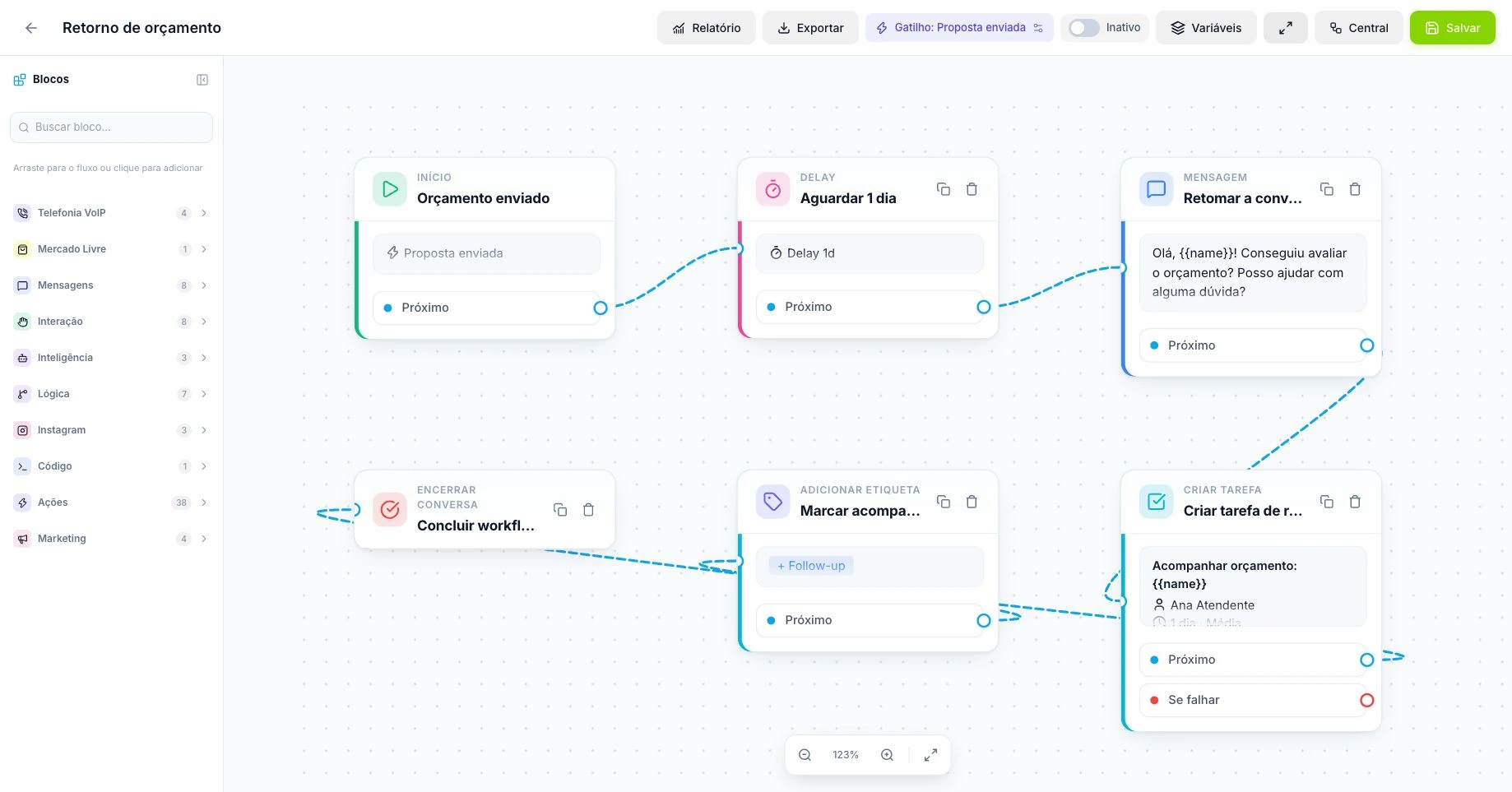
Open Workflows under Automations and use Tag added to contact when that is the mechanism selected for the campaign. Configure intervals and branches for replies and silence. Use Wait for interaction to choose the next step from the response. Test how a contact leaves the audience after asking to stop or progressing into active handling. With the official WhatsApp API, configure the appropriate approved template when reopening contact requires one under the applicable messaging window.
Prepare AI for the replies you expect
Review the AI agent's instructions and knowledge for the campaign offer. Define what it can answer, the information it should collect and when to hand off to sales. Include the offer's validity and terms in approved sources. Test customers who do not remember the purchase, want another service or request special commercial terms. A human owner should be able to take over with access to the history and the purpose of the reactivation.
Review response, revenue and relationship quality
Measure contacts actually reached, replies, reopened opportunities and recorded sales. Also review stop requests and delivery problems. Compare the result with the team's effort and channel costs. Update tags and stages when the campaign finishes so the next cycle begins with organized information. A well-reviewed campaign teaches you about buying timing and customer needs. Use those lessons to make future contact more relevant and to maintain stronger business relationships over time.
Define inactivity around the customer buying cycle
A weekly coffee buyer and a company renewing an annual service need different inactivity criteria. Start with customers sharing an offer and buying cycle. In an illustrative example, a distributor reviews customers who bought monthly and have gone ninety days without a new deal. Before contacting them, check for open service requests, unresolved complaints, or recent purchases recorded elsewhere. Each situation needs a specific response.
In FunnelOps, use contact history, labels, and Kanban deals to prepare a reviewable selection. Assign someone to verify the list and record why each customer qualifies. Exclude people requesting no further contact and those outside the offer's audience. If purchase data is incomplete, start with a smaller sample and confirm it. A large list with inconsistent criteria creates rework and makes results harder to interpret. Keep the selection criteria and date in a working note. This makes the test audience reproducible and prevents comparing different groups as if they received the same action.
Prepare the conversation and AI boundaries before sending
The opening should recover context the business actually knows. If a customer requested a proposal without proceeding, ask whether the need remains relevant. For previous purchases, offer appropriate help with use or replenishment. Avoid assuming why they stopped buying. Their reply may reveal priorities, budget, dissatisfaction, or lack of opportunity. Prepare the team to record the reason and choose the next action.
In FunnelOps AI agent settings, review the knowledge base with current products, conditions, and qualification questions. Define when to hand over to a person, especially for complaints, commercial exceptions, and approval-dependent requests. Simulate interest, rejection, and a complaint. Check that AI handles each appropriately and the team receives context. Discounts and special terms should appear only when authorized and correctly configured.
Test workflow exits as carefully as entry
In Automations and Workflows, the contact-label-added trigger supports a controlled entry. Prepare a test label and apply it to fictional contacts first. Use Wait for response to check reply and no-reply branches. Choose a waiting interval that fits the operation and verify the channel. On official WhatsApp, business-initiated messaging must follow the current template and permission requirements applicable to the send.
Also test replies, requests to stop, and deals that have already advanced. Confirm the logic prevents unnecessary attempts and labels shared with other flows do not trigger unexpected re-entry. Document the exit condition and how exceptions are handled. Before expanding the audience, review test-contact history and message states. A processed task needs reconciliation with actual delivery to the recipient.
Measure return and customer friction within the same audience
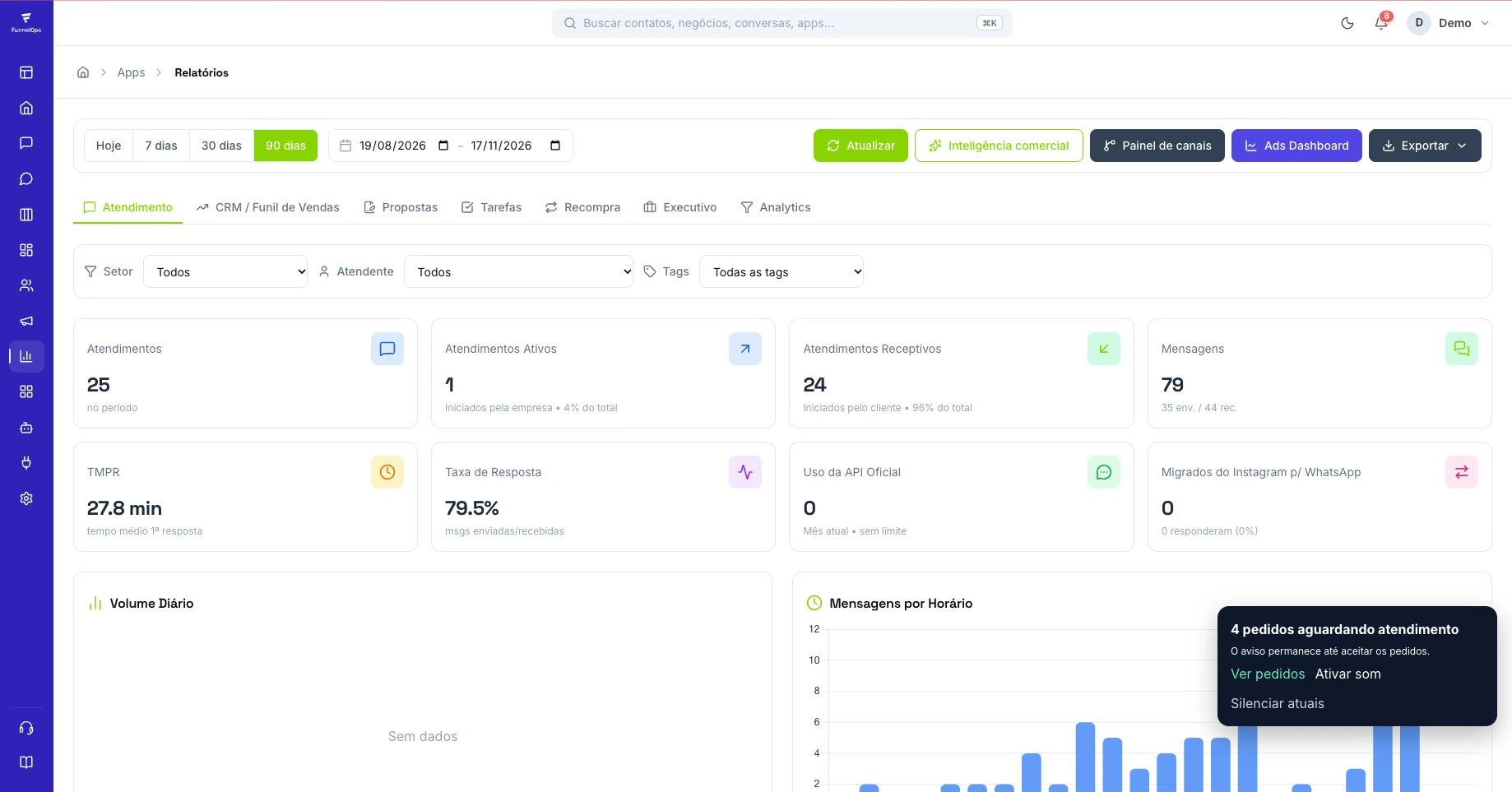
Suppose, purely as an illustration, one hundred contacts receive the outreach, twenty reply, and eight reopen an opportunity. The reply rate is twenty percent of reached contacts. The eight opportunities represent eight percent of that same audience. If three become sales, record their value and time to close. Separate interest, rejection, and stop requests to understand conversation quality alongside response volume.
Include channel costs and team effort before repeating. Compare inactivity reasons and route recurring problems to the people who can resolve them. If many customers report service difficulties, improving support may be the next action. In FunnelOps, keep outcomes with the contact and deal so future outreach considers the history. Repeat with stable criteria and intervals appropriate to the buying cycle, avoiding unnecessary persistence with people who already replied.