

Customer-service automation used to mean rigid menus such as “press 1 for sales.” An AI agent can interpret questions and respond with context when suitable information and tools are available. Its scope needs configuration and testing before use with customers.
What an AI agent really does
Unlike a fixed flow chatbot, an AI Agent connected to your CRM:
- Answers in context: knows the customer's history, catalogue and business policies;
- Lead rating: asks the right questions and marks the lead with labels and passage of the funnel;
- Agenda of commitments: check the available times and confirm in the conversation itself;
- It's time to get out of the scene: Transfer a human assistant with a summary of what has already been said.
Where AI shines (and where the human is irreplaceable)
AI can handle recurring questions about prices, opening hours and timelines when approved information and suitable tools are available. Measure how common those questions are in your operation and test answer quality. Define a human handoff for exceptions, complaints and explicit requests for a person.
Already a delicate complaint, a big negotiation or an angry client deserve real people. The secret is to set up clear transfer activators: negative feeling, high value involved or explicit request to speak to human.
Combine AI and human service with quality criteria, contextual handoffs and verified outcomes.
Checklist to start
- Centralize channels (WhatsApp, Instagram, Facebook) in a single input tray;
- It documents the 20 most frequently asked questions and the ideal answers.
- Train the agent with the tone of voice of the brand, including emojis, if it makes sense;
- Establish transfer rules for humans and care schedules;
- Follow the metrics weekly: AI resolution rate, response time, satisfaction.
Conclusion
AI can expand service capacity when knowledge, actions and human handoff work together. Start with a pilot, inspect the records and compare quality, continuity and commercial outcomes across equivalent periods. Expand usage based on evidence from your operation.
Start with one small task and a reliable source
A first agent does not need to handle the entire buying journey. Consider a school that wants to answer course questions and pass interested people to an adviser. Separate information approved for disclosure: course names, format, duration, requirements and approved terms. Identify questions requiring a person, such as exceptional scholarships or negotiation outside policy. This scope makes testing easier and helps the team locate the cause of an incorrect answer.
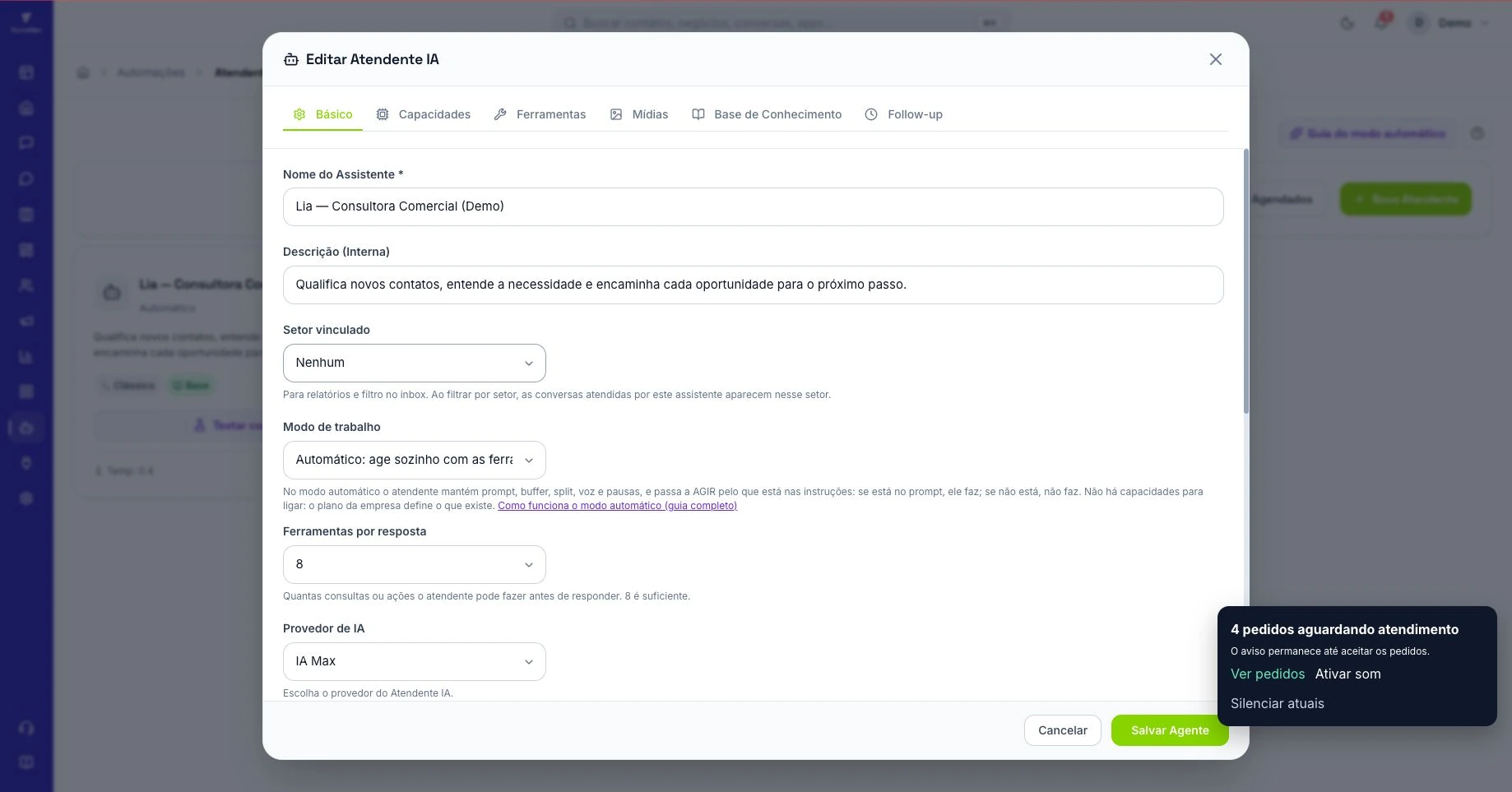
In FunnelOps, open Automations › AI Agents and create the agent. Under Basic, check its name, department and working mode; then prepare instructions and a knowledge base from reviewed materials. Old documents, contradictory pages and prices without validity undermine results. Choose an authoritative source for each topic and agree on who updates it. Writing “answer correctly” is insufficient: explain what the agent should consult, when to acknowledge missing information and when to transfer. Use vocabulary the team and customers actually understand.
For maintenance, appoint someone at the school to approve changes before updating the materials used by the agent. When enrollment for a class closes, update the test answers mentioning that class too. An updated knowledge base should change observed behavior, not merely acquire another file. Keep a reference question for each important commercial fact and rerun those questions after revisions. This helps the team find inconsistencies before they recur across many live conversations, and gives the adviser a clear explanation of what changed from the previous approved version of the material.
Turn qualification into questions that support a decision
In the school example, initial qualification might ask which course interests the student, whether they prefer classroom or remote learning and when they want to start. Every answer should help the adviser. Avoid turning the conversation into a long form or requesting unnecessary sensitive data. Instruct the agent to reuse information already provided, clarify ambiguous replies and summarize context before transferring. “I'm interested” does not mean enrollment is confirmed or authorize every future contact.
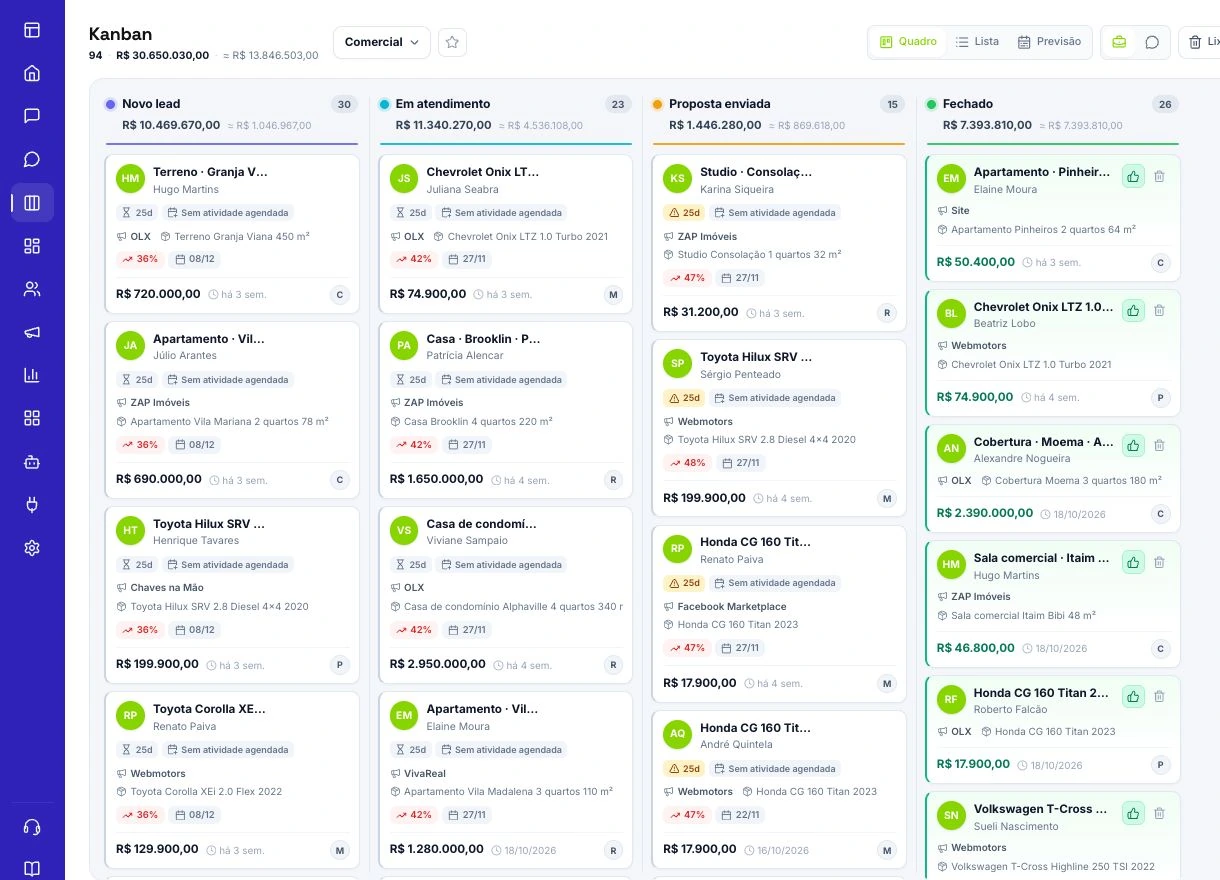
If CRM actions are involved, check the available tools and make instructions match the actual department, tag and stage names. New automatic FunnelOps agents can receive instructions in natural language; do not copy old bracketed commands from an incompatible tutorial. Define what moving an opportunity means and what still needs confirmation. A well-configured action helps organize work; applying a tag without criteria merely moves the disorder somewhere else.
Treat human handoff as part of the service
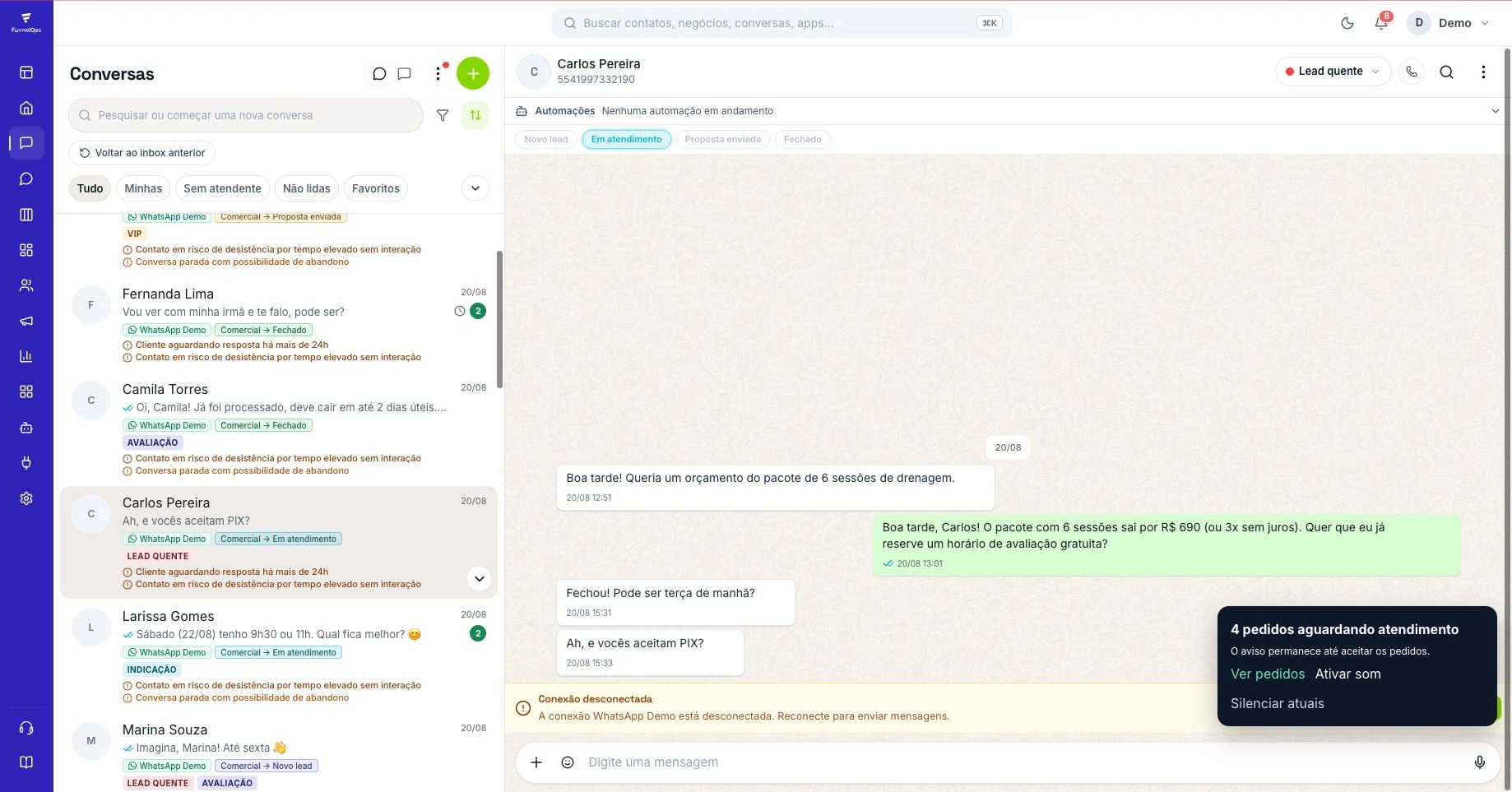
The student may ask for a person, question a price or report a problem the knowledge base cannot resolve. Under Basic › Transfer, configure the destination using the available structure: queue, round robin or a specific person. Explain which situations need handoff and what the agent may say while transferring. Be honest about the next step; do not promise an adviser is already reading the conversation unless that has been verified.
Then test the receiving side. Can the adviser find the conversation, understand the course requested and identify what remains unresolved? If not, adjust the process before expanding use. If the agent's own contextual follow-up is enabled, review attempts, intervals and stop conditions under Follow-up. That feature stops resuming when a reply or human transfer occurs, among other documented conditions. A separately created Workflow needs its own logic; Delay alone does not cancel a sequence when the contact responds.
Also agree on expectations outside team working hours. If nobody takes ownership immediately, the answer should explain the planned continuation without inventing availability. Check who reviews handoffs when the working day begins. In the pilot, simulate an out-of-hours request for a person and verify that the adviser receives an understandable outstanding issue. This scenario shows whether automation and the human routine were planned together or whether handoff still depends on improvisation. Do not confuse an immediate automated answer with a person being available to resolve the matter at that moment.
Test answers, actions and outcomes separately
Before connecting the agent to live service, prepare ten Test conversation scenarios: a common question, a question outside the knowledge base, a request for a person, a short message, incomplete information and an attempt to obtain unauthorized terms. Include variations the team actually receives. Compare expected and observed answers, change one rule at a time and restart for each scenario. The simulator may show an action the agent would take; this does not prove a message was sent, an appointment booked or a CRM record changed.
After a controlled launch, check the final record of every promised action. Open the corresponding opportunity, task or calendar instead of relying only on the answer's wording. Use agent activity to review timelines, tasks and cases needing intervention. Track incorrect information, transfers without continuation and questions repeated because knowledge is missing. The relevant outcome is a contact progressing with accurate information and a defined owner. Message volume and speed alone do not demonstrate quality or a completed sale.
Published by FunnelOps · 10 Jul 2026