

Define the outcome your campaign needs
Start with the business objective. A clinic might need booked consultations, while a B2B company needs qualified proposals. Record what counts as success and the period you will observe. Then follow the sequence from incoming conversation to qualification, opportunity and sale. This helps locate a bottleneck. Adjust targeting when contacts are a poor fit. Review response times, the sales process and the offer when interested prospects disappear during the conversation.
Keep the conversation and deal linked
When handling an ad lead in FunnelOps, check the available origin and keep the opportunity associated with its conversation. Record the owner, stage, value and outcome in Kanban. A manually created sale without this association may be absent from attribution. Investigate the integration when an ad identifier is missing. Report quality begins with how events arrive and how your team records and links the resulting sales opportunities in the CRM.
Review attribution in FunnelOps
Open Reports, go to Ads Dashboard and select Lead sources. The view supports analysis of conversations, deals, wins, revenue and conversion by ad or campaign where the necessary associations are identified. Choose a period appropriate to the sales cycle. An ad seen this week may produce a deal that closes next month. Inspect several cases in the history to understand how their amounts reached the report and avoid comparing campaigns with inconsistent record keeping.
Calculate return using the right costs
For ROAS, divide attributed revenue by ad spending for the same scope. If USD 200 of advertising produces USD 1,000 in attributed revenue, ROAS is 5. Interpret that figure alongside your margin. Economic return also depends on relevant costs such as customer handling, tools and delivering the service. Define a consistent calculation and preserve those assumptions when comparing periods and acquisition channels. That makes the result useful for deciding where to invest.
Use the data to improve the operation
Distinguish campaigns that attract suitable prospects from campaigns that mainly produce volume. Next, compare progress through sales stages. Low conversion after proposals may indicate a need to clarify quotations, improve the offer or organize follow-up. Use Workflows to standardize recurring actions and the AI agent to gather initial information. Change one part at a time and allow enough time to observe its effect on the relevant stage and business outcome.
Make campaign review a shared routine
Bring marketing and sales together around the same figures. Marketing explains spending and lead origin, while sales shares useful conversations, loss reasons and recorded revenue. Choose one concrete action for the following week and assign an owner. Document missing origin information and opportunities still in progress. Attribution supports better decisions when the report is interpreted alongside conversation history and the actual operating conditions that influenced how each sale developed.
Reconstruct one complete sale before reviewing totals
Choose a recent deal the team can explain end to end. Locate the initial conversation, available source information, contact, and corresponding opportunity. Check creation time, ownership, the moment it was marked won, and the recorded value. Follow the links available in FunnelOps. If the salesperson opened a separate deal or duplicated the contact, investigate before using the example to validate the report.
In Reports › Ads Dashboard › Lead sources, compare that journey with the selected period. A campaign might acquire the contact in October and close the sale in November. Note which event determines report inclusion. Also check whether deal value represents a signed contract, collected payment, or another company convention. Keep a documented definition, since sales and finance may recognize revenue at different moments.
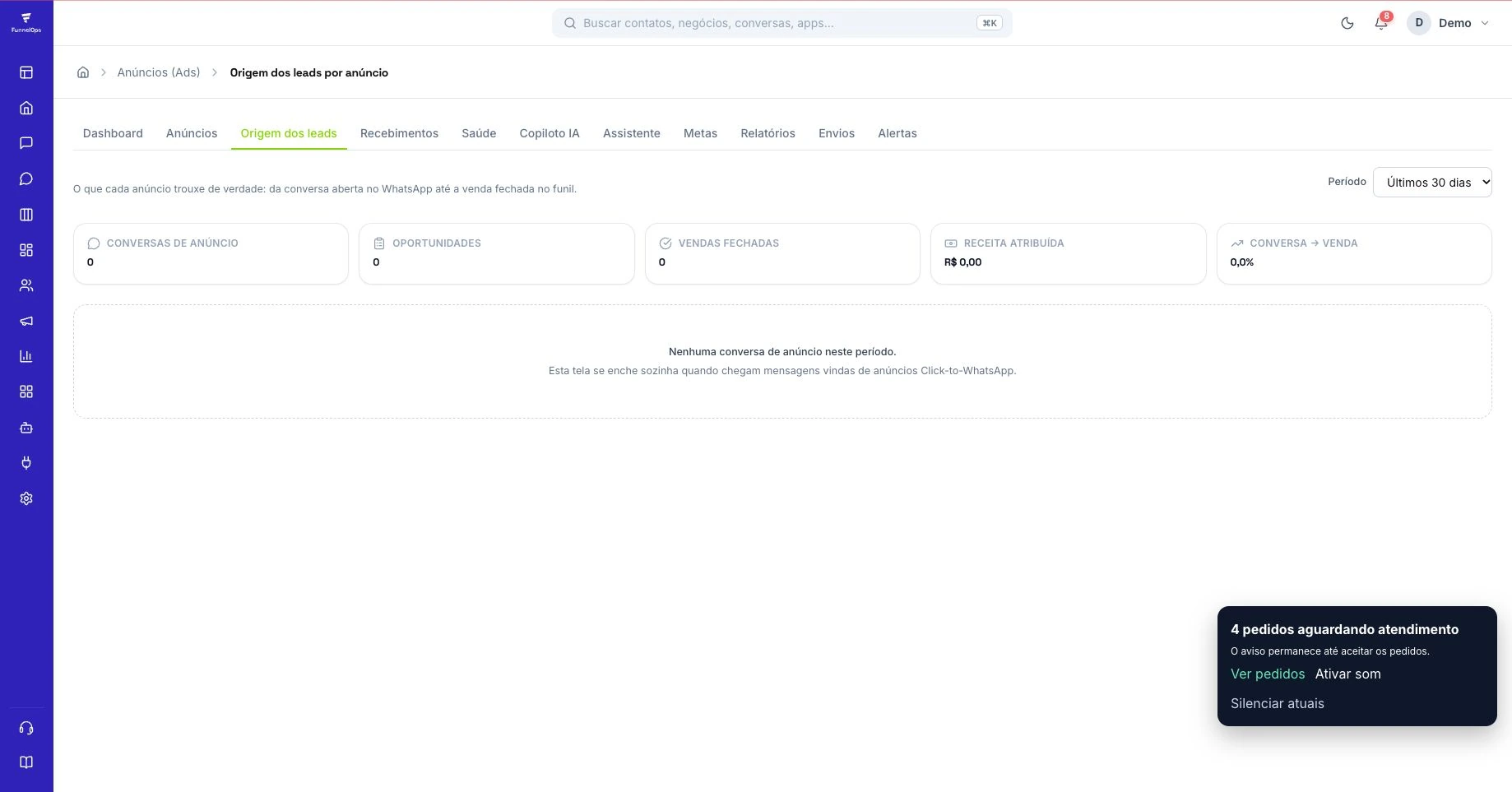
Separate identified sources, unknown sources, and manual corrections
Not every conversation contains enough information to connect a sale with a specific ad. Customers may return through a saved contact, share a number, or arrive through a route that loses campaign identification. Keep those cases unknown or grouped only as precisely as the data allows. A customer-reported source can be recorded, clearly distinguished from technical identification linked to an ad.
In FunnelOps sales operations, check the conversation-to-deal relationship before closing. If a link needs correction, preserve the reason in a deal note. Assign review ownership and avoid selecting the most recent campaign for convenience. Show the proportion of records lacking identified sources in the results. When it grows, investigate capture and recordkeeping before concluding that a campaign has stopped selling.
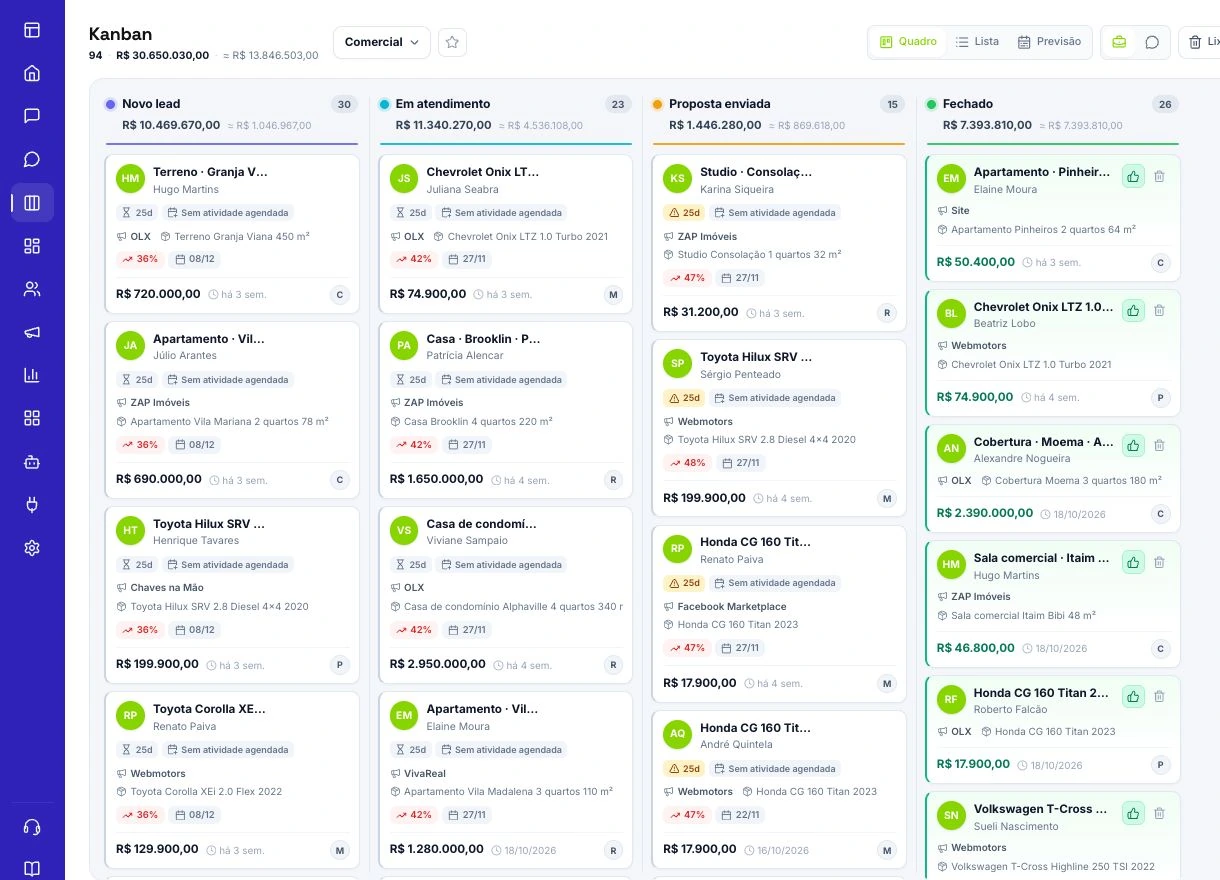
Read ROAS, acquisition cost, and margin in one example
Imagine a hypothetical campaign spending one thousand reais, generating fifty contacts, twenty qualified opportunities, and four sales of five hundred reais. Media cost per contact is twenty reais and per qualified opportunity is fifty. Attributed revenue totals two thousand reais, giving a ROAS of two. If all four buyers are new customers, media cost per acquired customer is two hundred and fifty reais. State those conditions alongside the calculation.
Now assume a forty-percent contribution margin before advertising. The revenue produces eight hundred reais to cover media and expenses excluded from that margin. Subtracting the one thousand reais in advertising leaves a negative two hundred. A positive ROAS still needs financial interpretation. Use FunnelOps deal values under your defined convention and supplement the analysis with costs your process records separately.
Choose the next adjustment where pipeline progress breaks down
If contacts arrive but few qualify, read the conversations and compare the ad promise with the intended customer. If qualified opportunities rarely reach proposals, review response time, discovery, and sales ownership. For proposals without sales, record specific objections and decision timelines. FunnelOps history and Kanban stages help find evidence before changing a campaign or script.
Compare groups that have had enough time to mature. Consultative sales can take weeks, so yesterday's contacts require later follow-up. Preserve filters and definitions for comparable reviews. Change one variable when volume allows its effect to be distinguished, and record the reasoning. A joint marketing and sales review should end with an action, an owner, and a review date using the same source and closing definition.