
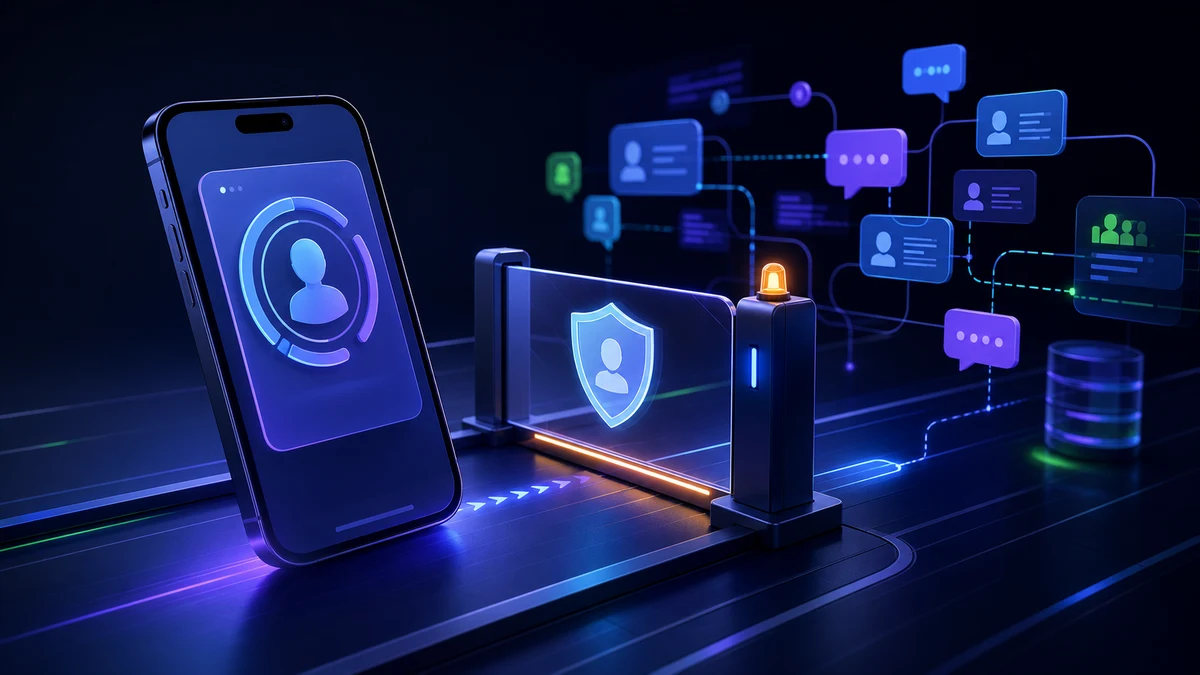
The user name may be one of the biggest identity changes that have been made in WhatsApp. Instead of sharing the phone number with someone you don't know yet, the user will be able to start contact with a unique name. For companies, this promises to facilitate the dissemination, discovery and standardization of the digital presence.
But the novelty found its first great proof even before the wide launch. India asked Meta not to make available the appeal in the country until it completed consultations on security, fraud and abuse. On July 7, WhatsApp had assured that it would wait for the end of those discussions before moving on that market.
The debate is not simply user against phone number. It is about how to gain privacy without losing confidence, traceability and protection against identity falsification.
What WhatsApp Announced
At the end of June, the Officially announced the booking of usernames. La funcionalidad es opcional y debe ser liberada gradualmente. Cuando esté activa, las personas y empresas que habilitan un nombre de usuario podrán chatear con nuevos contactos sin revelar el teléfono en la primera interacción.
The proposal also includes important care:
- there will be no public directory to explore names;
- You will need to know the exact username to start the conversation.
- An optional key may limit who can make the first contact;
- Creators, organizations and small businesses can claim names already used on Instagram or Facebook.
- The names associated with public figures and sensitive entities shall be further protected.
For the legitimate user, the gain is clear: the phone stops working as a mandatory public identifier. However, for brands, a new surface is emerging that should be managed.
Why India Requested a Rest
The Indian government expressed concern about the possibility of usernames facilitating knocks, phishing and profiles that mimic brands or known people. The Indian Expressthe platform agreed not to move forward in the country until consultations were concluded.
Fear is understandable. A phone number does not eliminate fraud, but offers the user a familiar signal to assess the origin of the contact. The user name reduces the exposure of that data and improves privacy; at the same time, it can make it easier to create names visually similar to those of a legitimate company.
Imagine a brand name called "Horizontal Store". A scammer does not need to get exactly the official name. You can try variations with scores, abbreviations or words like "support", "financial", and "official". On a small screen and during an urgent conversation, the difference may go unnoticed.
Privacy and anonymity are not the same
Hiding the phone in the first contact does not mean that the account ceases to link to a number. The user name functions as a public discovery layer, while the account infrastructure remains backed by internal registration and security mechanisms.
This difference is essential. Privacy means reducing unnecessary exposure of personal data. Anonymous, in the operational sense, would mean that there is no way to relate an activity to an account. The intention announced by WhatsApp is to deliver the first, not the second.
The challenge will be to make this distinction appear also in the user's experience. It is not enough for the system to know the origin of the account; the person needs to be able to clearly identify when speaking with the right brand.
What changes for businesses
The user name can become a brand asset as important as the domain of the site. The company will have to protect not only the main name, but also understand how customers can be confused by variations.
- Reservation and Governance: someone must be responsible for the name, credentials, access recovery and ownership changes.
- Official communication: The website, social networks, contracts, emails and physical materials must point to a unique and verifiable identifier.
- Customer training: the brand needs to explain how to recognize true attention and what you will never request by message.
- Fraud monitoring: Similar profile reports should quickly reach a team capable of investigating and guiding the public.
- Centralized History: The CRM must preserve the continuity of the relationship even when the public form of finding the company changes.
Possible impacts on API and automation
For operations that use APIs, bots, campaigns and scaled attention, the user name raises questions that go beyond the application screen. The main thing is how this new identity will be represented in connected systems.
Nowadays, many integrations use the phone as a key to locate or create a contact. If the user name joins the first contact, CRM platforms will need to avoid duplication and ensure that the public identity is correctly associated with the existing registry.
It will also be important to review:
- Rules of identification and deduplication of contacts.
- fields used by external automations and integrations;
- permits to change identity data;
- Audit of assistance and transfers between teams.
- How to demonstrate that a channel belongs to the company
- Complaints and incident response processes.
The business specification can evolve during launch. Therefore, it is not prudent to redesign the entire operation based on assumptions. The safe way is to maintain well structured data, documented integrations and the ability to adapt identifiers without losing track.
What the Indian Case Teaches Brazil
Although the pause has occurred in another market, the concerns are universal. Brazilian companies also coexist with false support, adulterated tickets, similar profiles and approaches that exploit urgency. The user name does not create these blows, but changes the way the identity will be presented.
This can increase the value of the already known confidence signs:
- consistent and up-to-date business profile;
- name disclosed only on channels controlled by the trade mark;
- contextual messages, no unexpected requests;
- accessible history for the assistant to recognize the day;
- clear procedures for payments, passwords and sensitive data;
- human attention available in case of suspicion.
The more it looks like a legitimate conversation with a generic approach, the easier it will be for a scammer to imitate it. Real context-based customization and consistent processes help the customer realize when something is out of standard.
How to prepare without anticipating what does not yet exist
The username reservation started, but the launch is gradual and the details may vary depending on the country and the type of account. The company must prepare without treating the assumptions as definitive rules.
- only accompany official communiqués on availability and operation;
- reserve the legitimate identifier as soon as the option appears in your account;
- Internally register who made the reservation and in what environment;
- Map integrations that depend exclusively on the phone;
- create a page on the website with the company's official channels;
- establish a protocol for false profile complaints;
- Try any changes in a controlled group before climbing.
Does the username still have potential?
Yes. Reducing phone exposure can improve the privacy of consumers, professionals and businesses. An easy-to-disclose name can also simplify the discovery of official channels and make more memorable campaigns.
The Indian obstacle does not invalidate the idea. It shows that digital identity cannot be treated only as an aesthetic choice. When billions of people use the same channel to speak, buy and receive support, small ambiguities can become large-scale problems.
The most prepared companies will be those that combine the new identifier with governance, security, centralized history and a consistent service experience. The user name can change. The responsibility to build trust in each conversation remains.
Are you ready for the next WhatsApp change?
Centralize contacts, histories, channels, automations and attention to evolve without losing context or control.
Talk to a specialist →Published by the team FunnelOps · 07 Jul 2026